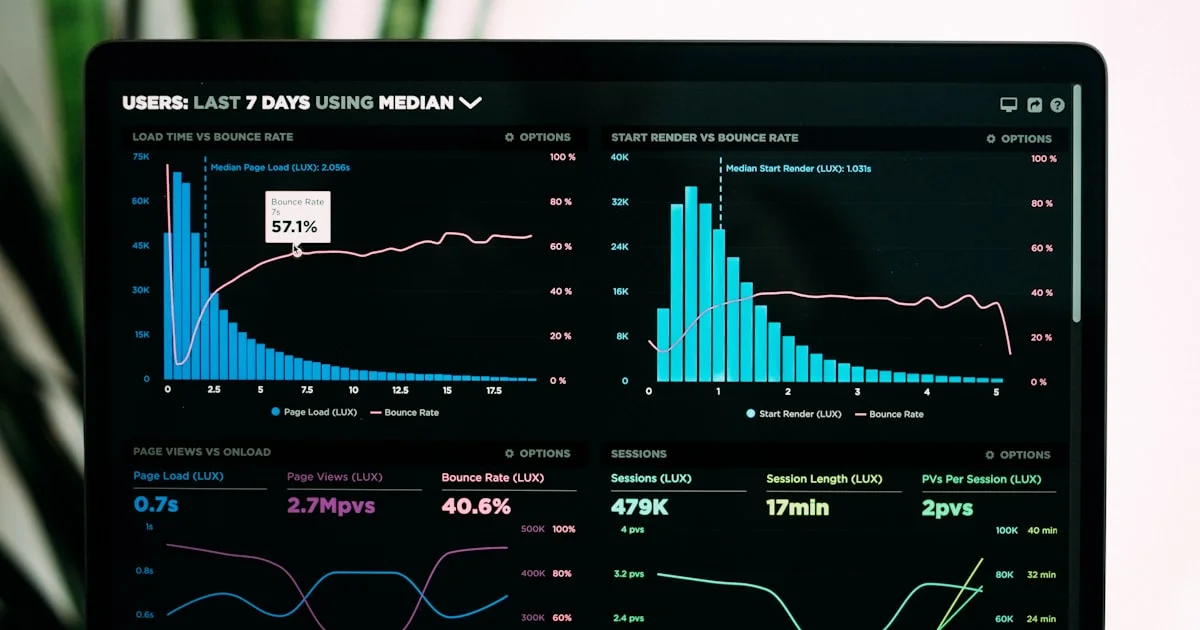
2026 is the year when Data Mesh transitions from buzzword to reality. Companies are saying goodbye to monolithic data warehouses and embracing decentralized data products, real-time event streaming, and AI-powered analytics. The transformation has begun.
The Data Mesh Revolution: Why Centralized Architectures Fail
For years, companies tried to consolidate all data into a central data warehouse. The result: overloaded data teams, months-long waiting times for new reports, and data silos that nobody can navigate anymore.
Data Mesh reverses this architecture. Instead of centralization, it relies on four fundamental principles:
- Domain Ownership: Each business domain is responsible for its own data
- Data as a Product: Data is treated like products – with SLAs, documentation, and quality guarantees
- Self-Serve Platform: A central platform enables decentralized autonomy
- Federated Governance: Global standards, local implementation
"Data Mesh is not just a technical architecture – it's an organizational paradigm that changes how we think about data responsibility."
— Zhamak Dehghani, Creator of Data Mesh
Event Streaming with Apache Kafka: The Nervous System of Modern Data Architectures
Apache Kafka has established itself as the indispensable backbone for real-time analytics in 2026. With Kafka 4.0 and the complete replacement of ZooKeeper by KRaft, the platform is more mature than ever.
The Kafka Architecture 2026
# kafka-cluster-config.yaml
apiVersion: kafka.strimzi.io/v1beta2
kind: Kafka
metadata:
  name: enterprise-data-mesh
spec:
  kafka:
    version: 4.0.0
    replicas: 5
    listeners:
      - name: internal
        port: 9092
        type: internal
        tls: true
      - name: external
        port: 9094
        type: loadbalancer
        tls: true
    config:
      auto.create.topics.enable: false
      compression.type: zstd
      num.partitions: 12
      default.replication.factor: 3
      min.insync.replicas: 2
    storage:
      type: persistent-claim
      size: 2Ti
      class: premium-ssd
  kafkaExporter:
    groupRegex: ".*"
    topicRegex: ".*"
Event-Driven Microservices Pattern
The classic request-response approach gives way to the event-driven pattern:
// order-service/src/events/order-placed.ts
import { Kafka, Partitioners } from 'kafkajs'

const kafka = new Kafka({
  clientId: 'order-service',
  brokers: process.env.KAFKA_BROKERS.split(','),
  ssl: true,
  sasl: {
    mechanism: 'scram-sha-512',
    username: process.env.KAFKA_USER,
    password: process.env.KAFKA_PASSWORD,
  },
})

const producer = kafka.producer({
  createPartitioner: Partitioners.DefaultPartitioner,
  idempotent: true,
  transactionalId: 'order-transactions',
})

interface OrderPlacedEvent {
  eventId: string
  eventType: 'ORDER_PLACED'
  timestamp: string
  payload: {
    orderId: string
    customerId: string
    items: Array<{ productId: string; quantity: number; price: number }>
    totalAmount: number
    currency: string
  }
  metadata: {
    correlationId: string
    source: string
    version: string
  }
}

export async function publishOrderPlaced(order: Order): Promise<void> {
  const event: OrderPlacedEvent = {
    eventId: crypto.randomUUID(),
    eventType: 'ORDER_PLACED',
    timestamp: new Date().toISOString(),
    payload: {
      orderId: order.id,
      customerId: order.customerId,
      items: order.items,
      totalAmount: order.total,
      currency: 'CHF',
    },
    metadata: {
      correlationId: order.correlationId,
      source: 'order-service',
      version: '2.0.0',
    },
  }

  await producer.send({
    topic: 'commerce.orders.placed',
    messages: [
      {
        key: order.customerId,
        value: JSON.stringify(event),
        headers: {
          'event-type': 'ORDER_PLACED',
          'content-type': 'application/json',
        },
      },
    ],
  })
}
Decentralized Data Products: The Heart of Data Mesh
A data product is more than just a table or dataset. It's a standalone, autonomous artifact with clear interfaces:
| Component | Description | Example |
|---|---|---|
| Input Ports | Data sources and events | Kafka Topics, APIs, Databases |
| Transformation | Business Logic | dbt Models, Spark Jobs |
| Output Ports | Consumable interfaces | REST APIs, SQL Views, Parquet Files |
| Data Contract | Schema and SLAs | JSON Schema, OpenAPI, Data Quality Rules |
| Observability | Monitoring and lineage | Metrics, Logs, Data Lineage Graph |
Data Contract Example
# data-products/customer-360/contract.yaml
dataProduct:
  name: customer-360
  domain: marketing
  owner: marketing-data-team
  version: 3.2.0
  description: |
    Unified customer view combining CRM, transactions,
    and behavioral data for personalization use cases.

schema:
  type: object
  properties:
    customerId:
      type: string
      format: uuid
      description: Unique customer identifier
    segment:
      type: string
      enum: [premium, standard, new, churning]
    lifetimeValue:
      type: number
      minimum: 0
      description: Predicted customer lifetime value in CHF
    lastActivity:
      type: string
      format: date-time
    preferences:
      type: object
      properties:
        language: { type: string }
        channels: { type: array, items: { type: string } }

sla:
  freshness: PT15M  # Max 15 minutes delay
  availability: 99.9%
  qualityScore: 0.95

access:
  classification: internal
  requiredPermissions:
    - marketing:read
    - analytics:read
Snowflake & dbt: The Modern Data Stack 2026
The combination of Snowflake as Cloud Data Platform and dbt as Transformation Layer dominates the enterprise market in 2026. New additions include native AI feature integration.
dbt with Snowflake Cortex
-- models/marts/customer_insights.sql
${{ config(
    materialized='incremental',
    unique_key='customer_id',
    cluster_by=['segment', 'region'],
    tags=['customer', 'ml']
) }}

WITH customer_base AS (
    SELECT
        customer_id,
        email,
        created_at,
        total_orders,
        total_revenue,
        last_order_date
    FROM ${{ ref('stg_customers') }}
),

-- Snowflake Cortex AI: Sentiment Analysis
support_sentiment AS (
    SELECT
        customer_id,
        AVG(
            SNOWFLAKE.CORTEX.SENTIMENT(ticket_text)
        ) AS avg_sentiment_score
    FROM ${{ ref('stg_support_tickets') }}
    WHERE created_at >= DATEADD(month, -3, CURRENT_DATE)
    GROUP BY customer_id
),

-- Snowflake Cortex AI: Churn Prediction
churn_prediction AS (
    SELECT
        customer_id,
        SNOWFLAKE.CORTEX.COMPLETE(
            'claude-3-opus',
            CONCAT(
                'Based on this customer data, predict churn risk (low/medium/high): ',
                TO_VARCHAR(customer_data)
            )
        ) AS churn_risk
    FROM customer_features
),

-- Segmentation with Clustering
segmentation AS (
    SELECT
        customer_id,
        CASE
            WHEN total_revenue > 10000 AND order_frequency > 12 THEN 'premium'
            WHEN days_since_last_order > 180 THEN 'churning'
            WHEN created_at > DATEADD(month, -6, CURRENT_DATE) THEN 'new'
            ELSE 'standard'
        END AS segment
    FROM customer_metrics
)

SELECT
    c.customer_id,
    c.email,
    s.segment,
    c.total_revenue AS lifetime_value,
    c.total_orders,
    COALESCE(ss.avg_sentiment_score, 0) AS support_sentiment,
    cp.churn_risk,
    CURRENT_TIMESTAMP AS updated_at
FROM customer_base c
LEFT JOIN segmentation s ON c.customer_id = s.customer_id
LEFT JOIN support_sentiment ss ON c.customer_id = ss.customer_id
LEFT JOIN churn_prediction cp ON c.customer_id = cp.customer_id

{% if is_incremental() %}
WHERE c.updated_at > (SELECT MAX(updated_at) FROM ${{ this }})
{% endif %}
dbt Tests and Data Quality
# models/marts/schema.yml
version: 2

models:
  - name: customer_insights
    description: "Customer 360 view with AI-powered insights"
    config:
      contract:
        enforced: true
    columns:
      - name: customer_id
        data_type: varchar
        constraints:
          - type: not_null
          - type: primary_key
        tests:
          - unique
          - not_null

      - name: segment
        data_type: varchar
        tests:
          - accepted_values:
              values: ['premium', 'standard', 'new', 'churning']

      - name: lifetime_value
        data_type: number
        tests:
          - not_null
          - dbt_utils.accepted_range:
              min_value: 0
              inclusive: true

    tests:
      - dbt_utils.recency:
          datepart: hour
          field: updated_at
          interval: 1
Apache Spark 4.0: Streaming and Batch United
With Spark 4.0, the boundary between batch and stream processing finally disappears. Spark Connect also enables complete decoupling of client and server.
# analytics/realtime_aggregations.py
from pyspark.sql import SparkSession
from pyspark.sql.functions import (
    window, col, sum, count, avg,
    from_json, to_json, current_timestamp
)
from pyspark.sql.types import StructType, StructField, StringType, DoubleType

# Spark Connect: Remote Session
spark = SparkSession.builder \
    .remote("sc://spark-cluster.internal:15002") \
    .appName("RealTimeAnalytics") \
    .config("spark.sql.streaming.stateStore.providerClass",
            "org.apache.spark.sql.execution.streaming.state.RocksDBStateStoreProvider") \
    .getOrCreate()

# Schema for incoming events
order_schema = StructType([
    StructField("orderId", StringType()),
    StructField("customerId", StringType()),
    StructField("amount", DoubleType()),
    StructField("currency", StringType()),
    StructField("timestamp", StringType()),
    StructField("region", StringType()),
])

# Kafka Source - Real-Time Stream
orders_stream = spark \
    .readStream \
    .format("kafka") \
    .option("kafka.bootstrap.servers", "kafka.internal:9092") \
    .option("subscribe", "commerce.orders.placed") \
    .option("startingOffsets", "latest") \
    .option("kafka.security.protocol", "SASL_SSL") \
    .load() \
    .select(from_json(col("value").cast("string"), order_schema).alias("order")) \
    .select("order.*")

# Windowed Aggregations
revenue_per_region = orders_stream \
    .withWatermark("timestamp", "10 minutes") \
    .groupBy(
        window(col("timestamp"), "5 minutes", "1 minute"),
        col("region")
    ) \
    .agg(
        sum("amount").alias("total_revenue"),
        count("orderId").alias("order_count"),
        avg("amount").alias("avg_order_value")
    )

# Output to Delta Lake and Kafka
query = revenue_per_region \
    .writeStream \
    .format("delta") \
    .outputMode("update") \
    .option("checkpointLocation", "/data/checkpoints/revenue") \
    .partitionBy("region") \
    .toTable("analytics.realtime_revenue")

# Parallel: Alerts to Kafka
alerts_query = revenue_per_region \
    .filter(col("order_count") > 1000) \
    .select(to_json(struct("*")).alias("value")) \
    .writeStream \
    .format("kafka") \
    .option("kafka.bootstrap.servers", "kafka.internal:9092") \
    .option("topic", "analytics.alerts.high-volume") \
    .option("checkpointLocation", "/data/checkpoints/alerts") \
    .start()

query.awaitTermination()
AI-Powered Insights: From Data to Decisions
In 2026, analytics without AI is almost unimaginable. The integration of Large Language Models into analytics workflows enables entirely new use cases:
- Natural Language Queries: "Show me the top customers in Zurich with declining revenues"
- Automated Insights: AI detects anomalies and generates explanations
- Predictive Analytics: Churn prediction, demand forecasting, fraud detection
- Data Quality Automation: Automatic detection and correction of data errors
Text-to-SQL with Claude
// analytics-api/src/natural-language-query.ts
import Anthropic from '@anthropic-ai/sdk'
import { db } from './database'

const anthropic = new Anthropic()

interface QueryResult {
  sql: string
  explanation: string
  data: Record<string, unknown>[]
  visualization: 'table' | 'bar' | 'line' | 'pie'
}

export async function executeNaturalLanguageQuery(
  question: string,
  context: { tables: string[]; userRole: string }
): Promise<QueryResult> {

  // Load schema information
  const schemaInfo = await getSchemaForTables(context.tables)

  const response = await anthropic.messages.create({
    model: 'claude-sonnet-4-20250514',
    max_tokens: 2000,
    system: `You are a SQL expert for Snowflake.
Generate only safe SELECT statements.
Available tables and schemas:
${schemaInfo}

Always respond in JSON format:
{
  "sql": "SELECT ...",
  "explanation": "This query...",
  "visualization": "table|bar|line|pie"
}`,
    messages: [
      {
        role: 'user',
        content: question,
      },
    ],
  })

  const result = JSON.parse(response.content[0].text)

  // SQL Injection Prevention
  if (!isSafeQuery(result.sql)) {
    throw new Error('Unsafe query detected')
  }

  // Execute query
  const data = await db.execute(result.sql)

  return {
    sql: result.sql,
    explanation: result.explanation,
    data,
    visualization: result.visualization,
  }
}
BI Dashboards & Visualization: The Last Mile
The best data architecture is useless if insights don't reach decision-makers. In 2026, leading tools focus on Embedded Analytics and Self-Service BI.
Tool Comparison 2026
| Tool | Strengths | Ideal for | Price (CHF/User/Month) |
|---|---|---|---|
| Tableau | Visualization, Enterprise Features | Large teams, complex dashboards | 70-150 |
| Looker | Semantic Layer, Git Integration | Data Teams, Embedding | 60-120 |
| Metabase | Open Source, Self-Service | Startups, Self-Hosting | 0-85 |
| Superset | Open Source, SQL-First | Technical Teams | 0 (Self-Hosted) |
| Sigma | Spreadsheet UI, Cloud-Native | Business Users | 50-100 |
Embedded Analytics Example
// components/EmbeddedDashboard.tsx
'use client'

import { useEffect, useState } from 'react'
import { LookerEmbedSDK } from '@looker/embed-sdk'

interface DashboardProps {
  dashboardId: string
  filters?: Record<string, string>
}

export function EmbeddedDashboard({ dashboardId, filters }: DashboardProps) {
  const [dashboard, setDashboard] = useState<LookerDashboard | null>(null)

  useEffect(() => {
    LookerEmbedSDK.init('https://analytics.mazdek.ch', {
      auth_url: '/api/looker/auth',
    })

    LookerEmbedSDK.createDashboardWithId(dashboardId)
      .withFilters(filters || {})
      .withTheme('mazdek_dark')
      .appendTo('#dashboard-container')
      .build()
      .connect()
      .then(setDashboard)
  }, [dashboardId, filters])

  const handleExport = async () => {
    if (dashboard) {
      await dashboard.downloadPdf()
    }
  }

  return (
    <div className="dashboard-wrapper">
      <div className="dashboard-toolbar">
        <button onClick={handleExport}>PDF Export</button>
        <button onClick={() => dashboard?.refresh()}>Refresh</button>
      </div>
      <div id="dashboard-container" className="h-[600px]" />
    </div>
  )
}
Implementation Roadmap: From 0 to Data Mesh
A Data Mesh transformation doesn't happen overnight. Here's a realistic roadmap:
Phase 1: Foundation (3-6 Months)
- Build Self-Serve Data Platform (Snowflake, dbt Cloud)
- Set up Kafka Cluster for Event Streaming
- Define Data Governance Framework
- First pilot data product with one domain team
Phase 2: Scale (6-12 Months)
- Onboard 3-5 additional data products
- Establish Data Contracts as standard
- Implement BI tool strategy
- Implement Data Quality Monitoring
Phase 3: Optimize (12-18 Months)
- AI-powered analytics features
- Expand real-time use cases
- Refine Federated Governance
- Cost Optimization and FinOps
Conclusion: Data as Strategic Competitive Advantage
Data Mesh, Real-Time Analytics, and AI-powered Insights are no longer optional nice-to-haves in 2026 – they are business-critical capabilities. Companies that invest now secure decisive competitive advantages:
- Faster Decisions: From days to seconds
- Better Data Quality: Through decentralized responsibility
- Scalable Architecture: Growth without bottlenecks
- AI-Readiness: Solid data foundation for ML and GenAI
At mazdek, we guide companies on their journey to becoming data-driven organizations – from strategy through architecture to implementation.